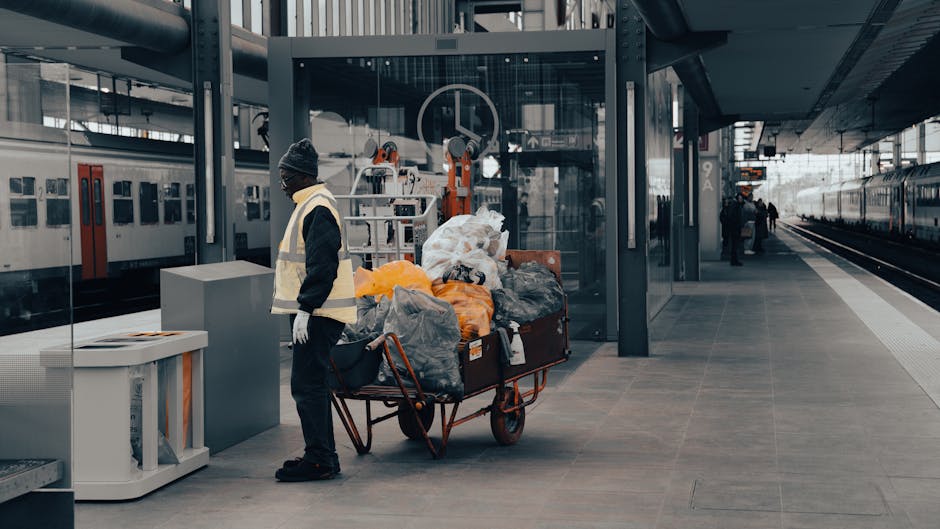
Rubbish removal services near Watford Junction station: a practical local guide
If you are looking for rubbish removal services near Watford Junction station, chances are you need things gone quickly, neatly, and without turning your day upside down. Maybe it is a flat clearance, a broken sofa, renovation debris, or the sort of mixed waste that quietly builds up until the hallway starts looking like a storage unit. Near a busy station, timing matters too. Access can be awkward, parking can be tight, and nobody wants bags left out when commuters are passing by at 8:15 on a wet Tuesday morning.
This guide explains how local rubbish removal works, what to expect, who it suits, and how to choose a service that is efficient, careful, and good value. It also covers a few things people often miss, like waste types, compliance, and how to avoid paying for the wrong solution.
Contents
- Why rubbish removal near Watford Junction station matters
- How the service works
- Key benefits and practical advantages
- Who this is for and when it makes sense
- Step-by-step guidance
- Expert tips for better results
- Common mistakes to avoid
- Tools, resources and recommendations
- Law, compliance, standards and best practice
- Options, methods and comparison table
- Case study or real-world example
- Practical checklist
- Conclusion
- Frequently asked questions
Why rubbish removal near Watford Junction station matters
Stations create a very specific kind of pressure. There is movement, limited waiting space, time-sensitive travel, and often a mix of homes, offices, managed blocks, and small commercial premises all packed into the same patch of ground. That means rubbish removal in this part of Watford is not just about lifting waste. It is about doing it without causing disruption.
Near Watford Junction station, a good waste clearance service helps with the practical realities of local life: quick access, shared entrances, narrow roads, and the need to work around residents, tenants, staff, and delivery schedules. A pile of waste that seems harmless for an hour can quickly become a nuisance if it blocks a doorway, attracts attention, or makes a shared area feel untidy. Let's face it, no one wants a good first impression ruined by a lopsided stack of old office chairs.
It also matters because the wrong disposal method can create problems later. You may think you have saved a bit of time, but if waste is mixed incorrectly, dumped in the wrong place, or left for too long, the hassle grows. The right service reduces friction from the start.
Expert summary: Near Watford Junction station, the best rubbish removal service is usually the one that combines fast access, clear pricing, sensible load handling, and a proper understanding of local site constraints.
How rubbish removal near Watford Junction station works
Most rubbish removal services follow a simple process, though the details matter more than people think. In practical terms, it usually goes like this:
- You describe the waste. This may be general rubbish, bulky household items, renovation waste, office clutter, or a mix of materials.
- The service estimates the load. Many providers will ask for photos, a rough volume estimate, or details about access.
- A collection time is arranged. Near a station, this may need to fit around traffic, loading bays, rail-side footfall, or building rules.
- The team arrives and loads the waste. Good operators will do the lifting, avoid unnecessary mess, and keep disruption low.
- The waste is sorted and taken away. Reusable and recyclable materials should be separated where possible, and any special waste handled correctly.
For many customers, the best thing about this model is that it is straightforward. You do not need to hire a van, load anything yourself, or worry about multiple trips. That said, a simple process can still go wrong if access is poor or the waste type has not been explained properly. A quick photo can save a lot of awkwardness later. Worth it, frankly.
If you need a broader clearance for a flat, home, or storage space, it can help to look at related options such as flat clearance, home clearance, or office clearance. Those services often fit better than a generic collection when the job is more than a few bin bags.
Key benefits and practical advantages
There are plenty of reasons people choose rubbish removal instead of trying to manage waste themselves. The obvious one is convenience. The less obvious ones are often the ones that matter most on the day.
- Speed: A professional team can clear space in one visit rather than stretching the job over a weekend.
- Less physical strain: Heavy or awkward items do not need to be carried through stairwells by one exhausted person and a very optimistic friend.
- Cleaner finish: Good removal work leaves areas tidier, not just emptier.
- Better waste separation: Items that can be recycled or reused are more likely to be handled properly.
- Reduced disruption: This matters near a station where footfall, noise, and access all need a bit of care.
- Flexible for different waste types: Builders' waste, furniture, appliances, and mixed household clutter often need different handling.
There is also a quieter benefit: mental relief. Clearing rubbish often unlocks progress on other things. A hallway becomes passable again. A spare room starts feeling usable. A shop back room stops becoming "that place where everything goes for now". You know the one.
For people dealing with bulky items, it can be useful to compare specialist support such as furniture disposal and mattress and sofa disposal, especially where items are too large or awkward for normal bins.
Who this is for and when it makes sense
Rubbish removal services near Watford Junction station are useful for a wide range of people, but they are not always the right answer for every job. The clearest fit is for anyone with waste that is bulky, mixed, urgent, or simply too much for standard council collections to handle conveniently.
Typical users include:
- Flat residents who are moving, decluttering, or replacing furniture
- Landlords and letting agents needing a quick turnaround between tenancies
- Office managers clearing old desks, chairs, boxes, and archive material
- Tradespeople with renovation or construction waste after a job
- Homeowners tackling lofts, garages, gardens, or full-property clearances
- Small businesses that need a practical way to clear stock, packaging, or redundant equipment
It also makes sense when access is awkward. Around a station, you may have limited parking, shared entry points, time restrictions, or a building manager to coordinate with. A service that understands this can save a surprising amount of effort.
If the job is larger or more structured, related services such as house clearance, loft clearance, or garage clearance may be a better fit than a one-off general load. Different jobs, different tools. Simple as that.
Step-by-step guidance
If you want the process to go smoothly, a little preparation goes a long way. It does not need to be complicated.
- Sort the waste into rough groups. Keep general rubbish, bulky items, appliances, and any suspicious or hazardous material separate.
- Check what needs special handling. Fridges, freezers, paint tins, chemicals, and similar items should not be treated as normal rubbish.
- Measure the access route. Doors, stairs, lifts, narrow hallways, and any shared entrances all matter.
- Take clear photos. Good photos help with quoting and reduce surprises on the day.
- Confirm timing. In a busy area near Watford Junction, short arrival windows can make the difference between a smooth job and a frustrating one.
- Ask about recycling and disposal. You want to know where the waste is going, even if the answer is simply that it will be sorted appropriately.
- Prepare payment and paperwork. Good providers make this easy, but it helps to be ready.
A small real-world note: if waste is scattered across several rooms, it is often worth gathering it into one safe staging area before the team arrives. That can reduce carrying time and keep the job moving. Not always possible, of course, but when it is, it helps a lot.
For customers comparing ways to manage mixed waste, waste removal is a useful starting point, while builders waste clearance can be more appropriate for renovation debris and heavier site waste.
Expert tips for better results
The difference between a decent clearance and a genuinely smooth one often comes down to small details. Here are the things worth paying attention to.
- Be honest about the load size. Underestimating waste usually leads to awkward delays or re-pricing.
- Flag difficult items early. If there is a broken appliance, a heavy wardrobe, or anything that needs two-person lifting, say so upfront.
- Use photos with context. One close-up of a sofa is less useful than a wider shot showing the room and access route.
- Keep hazardous items out of the pile. Mixing them in with normal rubbish is asking for trouble.
- Ask how the collection is handled near loading constraints. Around the station, this can matter more than anywhere else.
Another good habit: ask what happens after collection. You do not need a lecture, just a straightforward explanation of sorting, recycling, and disposal. A trustworthy provider should be able to explain the basics without sounding evasive or rehearsed. If they can't, that is a bit of a smell test, honestly.
For items with a stronger sustainability angle, you may also want to review recycling and sustainability so you understand how reuse and recycling are typically approached.
Common mistakes to avoid
Most rubbish removal headaches are avoidable. The same mistakes crop up again and again, usually because people are in a rush.
- Not checking access first: A van may be nearby, but if the waste cannot be reached safely, the job slows down fast.
- Mixing regular rubbish with special waste: Batteries, liquids, fridges, and hazardous materials need different handling.
- Ignoring building rules: Flats and managed properties often have their own requirements about timing, loading, or noise.
- Choosing only on price: Cheapest is not always cheapest once delays, exclusions, or add-ons appear.
- Leaving everything until the last minute: This is especially awkward near a station where space is tight and timing is not flexible.
One mistake people underestimate is assuming all waste is "just rubbish". It often is not. A couple of awkward items can change how the whole job needs to be handled. For example, if you have refrigeration units, fridge and appliance removal is a much better fit than throwing them into a general pile and hoping for the best. Hope is not a disposal strategy.
Tools, resources and recommendations
You do not need specialist equipment for most domestic clearances, but a few simple tools make preparation easier and safer.
- Heavy-duty sacks for loose waste and smaller bagged items
- Gloves for handling sharp or dusty materials
- Tape or labels to mark items that must not be moved or must be kept separate
- Phone camera for photos before collection
- Measuring tape if you are checking whether bulky items will fit through narrow spaces
For people working on a property clearance, it can help to think in categories rather than room by room. Furniture, soft furnishings, white goods, general clutter, and trade waste all behave differently in practice. That is why the service pages matter: a blanket approach can miss useful detail.
Useful related pages include furniture clearance, office clearance, and garden clearance. Choosing the right type of clearance is often more efficient than trying to squeeze everything into a single generic job.
Law, compliance, standards and best practice
Waste removal in the UK is not something to treat casually. You do not need to memorise legislation to make a sensible decision, but you should expect a provider to follow accepted handling and disposal practices.
In plain English, that means waste should be collected safely, transported properly, and taken to a legitimate disposal or processing route. Hazardous waste, electrical items, and certain appliances need particular care. If you are disposing of business waste, there may be extra expectations around records, segregation, or duty of care. The details vary by material and context, so caution is best.
For example, business customers near the station may be clearing offices, retail backrooms, or stock areas. In those cases, a service like business waste removal is often more suitable than a one-off household clearance. Likewise, if a load includes mixed rubble or building debris, specialist handling is sensible, not optional.
Best practice also includes:
- Clear description of waste before collection
- Separation of hazardous and non-hazardous materials
- Safe lifting and loading methods
- Respect for shared access and neighbouring properties
- Transparent pricing and no misleading assumptions
Insurance, safety procedures, and secure handling matter too. If you are comparing providers, it is worth looking at practical trust pages such as insurance and safety, health and safety policy, and payment and security. Those pages help you judge whether the business is operating with proper care.
Options, methods and comparison table
There is more than one way to clear rubbish near Watford Junction station, and the right choice depends on the type of waste, volume, access, and urgency. Here is a simple comparison to make the decision easier.
| Option | Best for | Advantages | Limitations |
|---|---|---|---|
| General rubbish removal | Mixed waste, bags, clutter, small bulky items | Fast, simple, usually flexible | May not suit specialist waste |
| Flat or home clearance | Whole rooms, moving prep, end-of-tenancy jobs | Better for large or mixed loads | Needs more planning and access coordination |
| Office clearance | Desks, chairs, archived items, workplace clutter | Good for business premises and staged removal | Often needs timing around business hours |
| Builders waste clearance | Renovation waste, rubble, timber, site debris | Better handling for heavy construction waste | Not ideal for general household clutter |
| Appliance or furniture specialists | Fridges, sofas, mattresses, bulky single items | Useful for awkward, heavy objects | Can be too narrow for mixed lots |
If you are not sure what category your waste falls into, that is perfectly normal. A lot of jobs are mixed. The best starting point is usually to describe the load plainly and let the service advise on the right method.
Case study or real-world example
Imagine a small rented flat a short walk from Watford Junction station. The tenant is moving out, the landlord wants the place ready for cleaning, and the hallway has a broken bookshelf, two bagged loads of general clutter, a mattress, and a few small electrical items. Nothing dramatic. But it is enough to make the place feel cramped and chaotic.
In that sort of scenario, a practical rubbish removal service can save the day. The team arrives with the right size vehicle, assesses the access route, and clears the items in one visit. The landlord gets the flat back faster. The tenant avoids multiple trips to the tip. The building stays tidy. Everyone gets to move on with their life, which is often the real win.
If the same flat also had a wardrobe, a sofa, and a spare room full of mixed furniture, then a more targeted service such as flat clearance or furniture disposal would likely be the better fit. The point is not to overcomplicate it. It is to match the service to the job.
And yes, sometimes the best result is simply having a clean floor again. Sounds basic. It isn't when you've lived around the mess for three weeks.
Practical checklist
Use this checklist before booking rubbish removal near Watford Junction station.
- Have I identified the main waste types?
- Have I separated anything hazardous, liquid, or specially handled?
- Can the team reach the waste safely without blocking others?
- Do I have clear photos of the load and access route?
- Have I checked whether the job is general rubbish, furniture, appliances, builders waste, or a clearance?
- Have I confirmed the timing works around station traffic, building rules, or business hours?
- Do I understand what is included in the service and what may count as an exception?
- Have I asked about recycling, disposal, and any paperwork I might need?
- Am I prepared for payment and access on the day?
If you can tick most of those off, the job usually goes much more smoothly. Simple preparation saves more stress than people expect.
Conclusion
Rubbish removal services near Watford Junction station are at their best when they are quick, careful, and adapted to the realities of a busy local environment. That means thinking about access, waste type, timing, and disposal standards before the team arrives. It also means choosing the right service for the job, rather than hoping a generic collection will cover everything.
Whether you are clearing a flat, handling office clutter, dealing with old furniture, or simply trying to get a room back under control, a well-planned rubbish removal service can make the whole process feel lighter. Not glamorous, maybe, but genuinely useful. And sometimes that is exactly what matters most.
Get a free quote today and see how much you can save.
If you are comparing options or want to understand the wider service range, it may also help to review the company's about us page and the practical guidance on pricing and quotes. A little clarity upfront can save a lot of back-and-forth later.
And once the clutter is gone, the space usually feels better straight away. Lighter. Quieter. Easier to breathe in.
Frequently Asked Questions
What do rubbish removal services near Watford Junction station usually collect?
They typically collect mixed household rubbish, bulky items, furniture, bagged waste, light commercial waste, and some renovation debris. The exact range depends on the provider and the type of waste involved.
Is rubbish removal better than hiring a skip near Watford Junction station?
It depends on the job. Rubbish removal is often better for quick, one-off clearances, awkward access, or mixed items. A skip can suit ongoing projects with a predictable waste stream. If you want a broader understanding of skip use, what can go in a skip is a useful reference point.
Can I get same-day rubbish removal near the station?
Sometimes, yes. Same-day service often depends on availability, access, and the size of the load. Near a station, prompt booking can help because schedules may fill quickly.
How do I know if my waste needs specialist handling?
If it includes fridges, freezers, chemicals, paint, electrical items, rubble, or anything you are unsure about, it is safest to mention it early. Specialist handling may be needed for safety and compliance reasons.
What should I do before the collection team arrives?
Sort the waste as much as possible, clear access routes, take photos, and separate anything hazardous or valuable. A little prep makes the job faster and reduces the chance of misunderstandings.
Are furniture and mattress removals included in rubbish clearance?
Often they can be, but many providers treat them as specific items with their own handling approach. For awkward bulky items, specialist pages such as mattress and sofa disposal and furniture disposal are worth checking.
Do I need to be present for the collection?
Usually yes, or at least someone should be available if access, payment, or item identification needs to be confirmed. Some arrangements may be possible in advance, but it is best not to assume.
How is rubbish removed from a flat near Watford Junction station if parking is tight?
That is exactly the kind of issue a local service should plan for. Good providers will ask about access, loading points, and timing so the collection can be completed with minimal disruption.
What happens to the rubbish after collection?
It is typically sorted and sent for reuse, recycling, recovery, or disposal depending on the waste type. Responsible handling matters, especially where materials can be separated rather than sent straight to landfill.
Is business waste handled differently from household rubbish?
Yes, often it is. Business waste may involve different expectations around segregation, documentation, and collection timing. If you are clearing a workplace, business waste removal is usually the more relevant route.
How do I avoid surprise charges?
Be accurate about waste volume, access, and item types. Clear photos help. So does asking what is included before booking. The more precise the description, the fewer surprises later.
What if I have a mix of general rubbish and builders waste?
That happens more often than you might think. The best approach is to describe the load honestly and ask whether it should be treated as general waste, builders waste, or a mixed clearance. If needed, builders waste clearance may be the better fit.
Are there any items I should never put in a normal rubbish pile?
Yes. Hazardous materials, liquids, batteries, certain electrical items, and some appliances should not be mixed casually with general rubbish. If in doubt, keep them separate and ask for guidance. It is the safer choice, every time.
Where can I learn more about the company before booking?
You can review the company's general information, service pages, and policies, including recycling and sustainability, insurance and safety, and contact details if you need to ask a specific question before arranging a collection.