Commercial Waste Watford — Health & Safety Policy
 This Health and Safety policy sets out the commitment of Commercial Waste Watford and associated commercial rubbish removal teams to protect the health of staff, contractors and the public across our rubbish company service area. The purpose of this document is to define safe systems of work, clarify responsibilities and outline processes that keep waste handling, transport and disposal activities secure and compliant. The policy applies to all commercial waste services in Watford operations, including collection, transfer, storage and disposal of refuse and recyclable materials.
Our organisation acknowledges its duty to provide safe equipment, adequate training and suitable personal protective equipment (PPE) to mitigate hazards. Management will ensure that risk assessments are carried out and that control measures are implemented and regularly reviewed. Employees are required to follow instructions, use provided safety equipment and report hazards promptly — cooperation at all levels is essential for effective waste management safety.
 The policy is underpinned by several core commitments which guide commercial waste services in Watford and the wider rubbish collection Watford activities:
- Risk identification: Regular site inspections and dynamic risk assessments.
- Training: Competency-based instruction for drivers, loaders and site staff.
- Equipment: Maintenance schedules for vehicles, compactors and handling tools.
Scope, Responsibilities and Risk Control
Scope covers all aspects of commercial refuse services provided, including trade waste collection, commercial recycling, skip services and transfer station activities. Senior management retains overall responsibility for policy implementation and resource allocation, whereas site supervisors and team leaders are accountable for day-to-day enforcement. Employees have a duty to report incidents and to participate in safety briefings and toolbox talks.
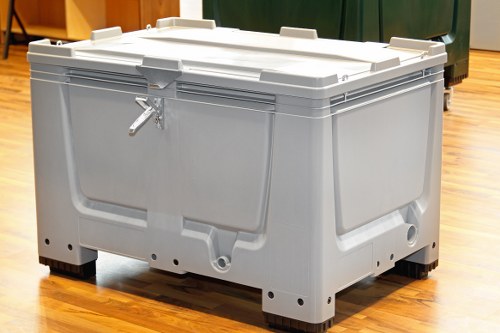 Risk control measures for the rubbish company service area include documented method statements, exclusion zones during vehicle manoeuvres, and safe stacking and segregation of waste streams. Manual handling procedures are enforced to reduce musculoskeletal injury; mechanical aids are provided where practicable. Contractors must work to our safety standards and carry evidence of their own risk assessments and insurances.
Hazardous and potentially infectious wastes are handled under separate containment protocols. Chemical and hazardous waste are identified, labelled and stored in designated containment areas until collection by authorised carriers. Sharps, clinical materials and hazardous substances follow isolation and disposal procedures agreed with licensed treatment facilities.
Training, Equipment and Operational Controls
Vehicles and mobile plant used in waste collection and transfer are subject to pre-shift checks and scheduled maintenance. Drivers receive defensive driving instruction and are trained in load security and safe reversing practices to prevent accidents in public areas. Vehicle routing is planned to minimise time on busy roads and reduce exposure to moving traffic.
 Staff training is continuous and risk-focused: induction, refresher sessions and role-specific modules form the basis of competency assurance. Training records are maintained and reviewed to ensure staff are competent for tasks such as hazardous waste handling, use of compactors and operation of lifts and tippers. Behavioural safety is emphasised to promote safe decision-making in dynamic environments.
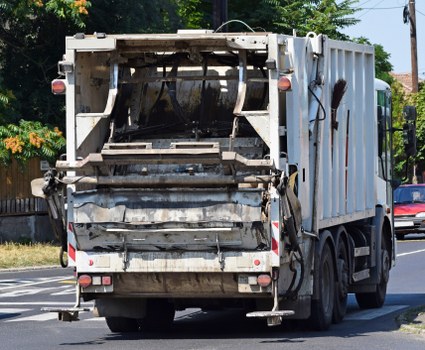 Emergency preparedness covers spill response, fire procedures and first aid. Clear instructions are provided for incident reporting and escalation, including isolation of hazards and preservation of scenes for investigation. Near-miss reporting is encouraged as part of a learning culture. Monitoring of safety performance is carried out through audits, inspections and incident trend analysis to identify improvement opportunities.
Record keeping and documentation form a critical part of the policy: training logs, risk assessments, vehicle inspections and incident records are retained to demonstrate compliance and support continual improvement. Audits will assess adherence to the policy and evaluate the effectiveness of control measures across all our commercial waste operations.
Review and continual improvement: this policy will be reviewed at planned intervals and after significant incidents or changes to operations. Lessons learned are applied to update procedures, training and risk controls so that our commercial rubbish removal processes remain resilient, safe and environmentally responsible. All staff are expected to engage with audits and to apply corrective actions where required.
Conclusion: Commercial Waste Watford commits to maintaining a safe workplace for employees, clients and the public through robust risk management, clear accountability and ongoing training. By embedding safety into every stage of the waste management lifecycle, from collection to disposal, we reduce harm, protect the environment and ensure that our rubbish company service area operates to high standards of health and safety across all contracts.
