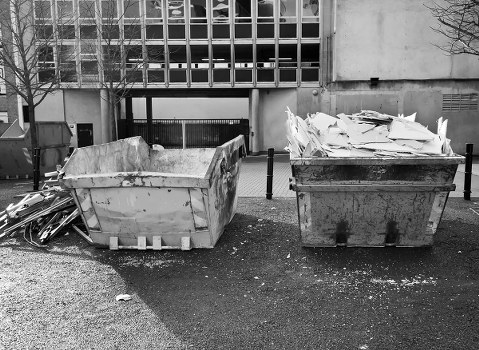
Recycling and Sustainability — Commercial Waste Watford
Welcome to our overview of sustainable commercial waste management across Watford. As a focused commercial waste Watford service, we prioritise the creation of an eco-friendly waste disposal area and support an active shift toward a resilient, circular local economy. Our approach balances operational efficiency, local regulation alignment, and measurable environmental outcomes for businesses across the borough.Our Eco-Friendly Waste Disposal Area
We operate dedicated transfer points and segregated collection systems so that the waste stream arriving at local transfer stations is already separated into recyclables, organics, and residuals. This reduces contamination rates and increases the likelihood that material is genuinely recycled rather than downcycled. We embrace the borough's approach to waste separation — paper, card, glass, mixed plastics, food and garden waste are handled distinctly where infrastructure allows — and tailor routes to each client's needs.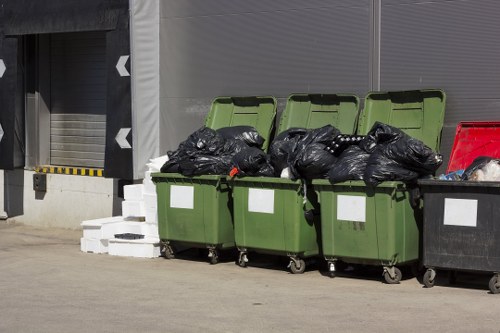
Local Transfer Stations and Infrastructure
The network of local transfer stations we use includes municipal and private sites in and around Watford and Hertfordshire, enabling quick turnaround and shorter vehicle journeys. Key transfer hubs accept commercial glass, bulky cardboard, construction and demolition (C&D) waste, and segregated organic streams. Using these transfer stations supports lower haul distances and integrates with regional recycling facilities to maximise reuse.Our sustainable rubbish area model encourages on-site segregation and practical containerisation so businesses can create an easy-to-manage, low-impact footprint. We help design bin layouts and signage that match the local policy on waste streams, enabling staff and contractors to separate materials correctly. This reduces contamination and increases recycling yields in line with waste hierarchy principles — reduce, reuse, recycle.
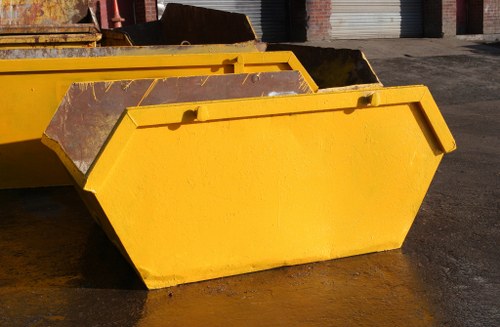 We have set a clear recycling percentage target to measure progress: our objective is to achieve a 65% recycling rate for commercial waste collected under our contracts by 2030. This target reflects an ambitious but achievable improvement over current averages and aligns with regional sustainability targets. We monitor diversion rates, contamination levels, and reuse metrics to track performance against this goal.
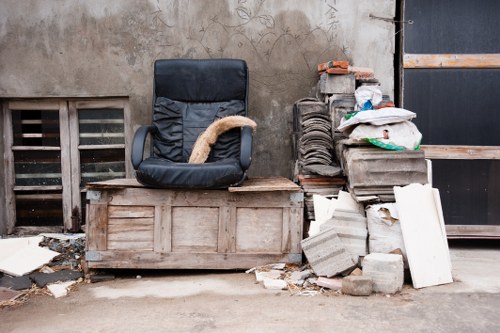
Partnerships with charities and community organisations are central to our reuse strategy. Unsold or surplus office furniture, fixtures and equipment are often diverted to local charities for refurbishment and reuse. Textiles and small electricals suitable for repair are redirected to social enterprises, while edible surplus is offered to accredited food redistribution charities. These partnerships reduce landfill, create social value and support a practical circular economy across Watford.
The fleet that serves our sustainable rubbish area is transitioning to low-carbon solutions. We operate a growing number of low-carbon vans and hybrid collection vehicles to reduce tailpipe emissions on urban routes, and apply route optimisation software to minimise mileage. Where suitable, electric vans are deployed for last-mile collections in pedestrianised and sensitive zones to protect local air quality.
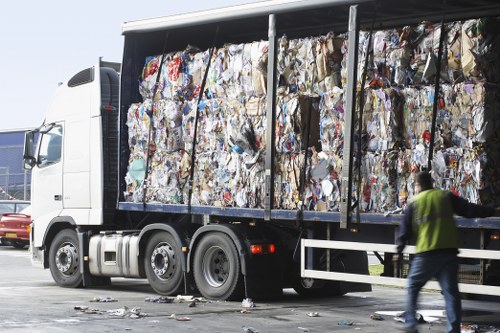 Our services cover a range of recycling activities relevant to the borough:
- dry mixed recycling collection (paper, card, cans, certain plastics),
- glass separation and consolidation at local hubs,
- food and garden waste processing for composting and AD (where available),
- commercial e-waste collection and documented transfer for refurbishment or safe recycling,
- construction waste segregation and aggregate recovery.
 We maintain rigorous documentation and reporting to support clients' sustainability declarations and to feed into corporate carbon accounting. Waste tonnages, recycling percentages, and estimated carbon savings from reuse and diversion are compiled in regular reports. This transparency helps businesses demonstrate progress against environmental targets and supports corporate ESG commitments.
Commitment to Low-Carbon Operations
Low-emission logistics are a core pillar of our strategy: by investing in cleaner vehicles, efficient transfer station usage, and dynamic scheduling, we reduce the embodied carbon of waste collections. We also encourage clients to adopt purchaser decisions that favour recyclable and repairable products, helping to shrink the overall waste footprint.Collaboration with the borough council and local stakeholders ensures our commercial waste Watford programmes integrate with wider municipal objectives. We support borough-led initiatives to improve source segregation and encourage businesses to join community reuse networks. Through these links we can scale impact across zones and improve material recovery rates for businesses throughout the borough.
